
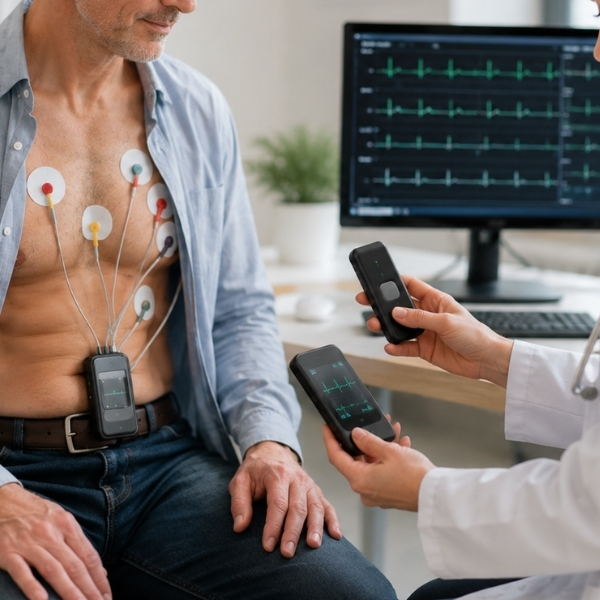
24-Hour Blood Pressure Monitoring and Hypertension Screening in Yarrabilba
A single blood pressure reading in a clinic can be misleading. Some people record high readings only because they feel anxious in medical settings (white coat hypertension), while others show normal clinic readings but run high blood pressure at home or overnight (masked hypertension). Both problems lead to the wrong diagnosis if decisions rest on one-off readings.
24-hour ambulatory blood pressure monitoring (ABPM) solves this by measuring your blood pressure automatically at regular intervals over a full day and night while you live your normal life. At Yarrabilba Cardiology & Specialist Centre, monitors are fitted on site and every recording is reported by our specialist cardiologists, with results sent promptly to your referring GP. Bulk billing is available for eligible patients with a valid Medicare referral.
Why Accurate Blood Pressure Assessment Matters
High blood pressure affects around 1 in 3 Australian adults and usually causes no symptoms, yet it is a leading contributor to heart attack, stroke, heart failure and kidney disease. Because treatment is often lifelong, the diagnosis should rest on accurate, real-world measurements, not a single reading on a stressful day.
Ambulatory monitoring shows:
If you are experiencing severe chest pain, sudden breathlessness or symptoms of a heart attack, call 000 immediately. A cardiology clinic is not an emergency service.
Hypertension Screening and Assessment
If you or your GP suspect high blood pressure, our screening assessment looks at the whole picture, not just the numbers. Depending on your situation, assessment may include:
If hypertension is confirmed, ongoing treatment is planned through our hypertension clinic in partnership with your GP.
What Happens During 24-Hour Monitoring
A short appointment where a cuff is fitted to your upper arm, connected to a small recorder worn on a belt or strap. Wear a loose-sleeved top.
The cuff inflates automatically at set intervals, typically every 20 to 30 minutes during the day and less often overnight. Keep your arm still and relaxed while it inflates, then carry on as normal.
Note your sleep and wake times, medication times and any symptoms, so readings can be interpreted in context.
Bring the monitor back the next day at the arranged time. The readings are downloaded, analysed and reported by our cardiologist.
The cuff inflations can feel firm and may briefly interrupt sleep, which is normal. Keep the device dry, so no showers or swimming while wearing it.
Getting Your Results
Your cardiologist reviews the full 24-hour profile, including daytime averages, night-time averages and the overall pattern, and sends a report to your referring GP. Depending on the findings, the next step may be reassurance, lifestyle guidance, starting or adjusting medication through your GP, or a consultation in our hypertension clinic for more complex cases.
Blood Pressure Monitoring FAQs
Yes. Normal daily activity is encouraged, because the aim is to measure your blood pressure during real life. Most people work, drive and go about their routine as usual.
Yes. Normal daily activity is encouraged, because the aim is to measure your blood pressure during real life. Most people work, drive and go about their routine as usual.
No. The monitor must stay dry, so shower before your fitting appointment and after the monitor is returned.
The cuff inflates less frequently overnight, but some people notice it. Night readings are among the most valuable parts of the test, so the monitor stays on while you sleep.
Blood pressure that reads high in a clinic but is normal in daily life, usually due to anxiety in medical settings. Ambulatory monitoring is the standard way to identify it and avoid unnecessary lifelong medication.
Bulk billing is available for eligible patients with a valid Medicare referral. Confirm your eligibility with our team when booking.
Home machines give useful spot checks, but ABPM records dozens of standardised readings across a full day and night, including during sleep, and the results are analysed by a specialist. The two approaches complement each other.
Book Blood Pressure Monitoring
Have a referral for 24-hour blood pressure monitoring or a hypertension assessment? Contact our team to arrange your appointment at our Yarrabilba clinic.